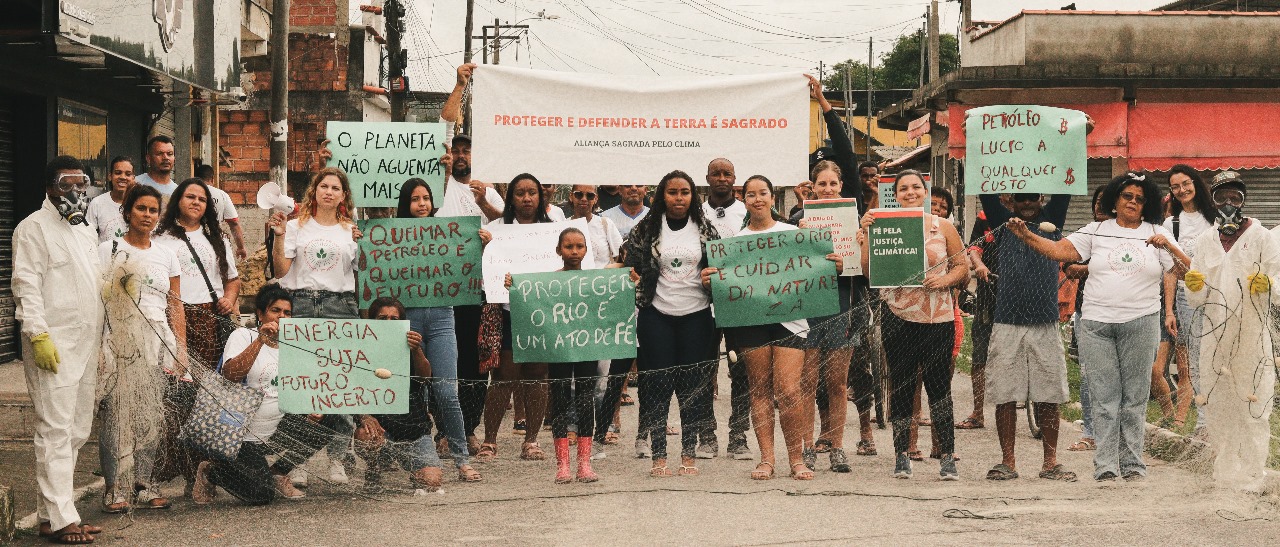
In response to the severe toxic spill that hit the Suruí River in Magé, Rio de Janeiro, last month, an interfaith walk for climate justice brought together residents, fishermen, and activists this Sunday (27). Led by GreenFaith Brasil, the symbolic act called for concrete actions to restore the river and protect the livelihoods of local communities, marking a union between faith and climate justice.
The accident, which occurred on October 1st, involved the collision of two trucks carrying thousands of liters of gasoline, diesel, and asphalt emulsion, resulting in a spill into the Suruí River. This impacted a large area of the Suruí Environmental Protection Area (APA), which was created by decree No. 2300/2007 to protect the remaining Atlantic Forest and the springs of the Suruí, Iriri, Inhomirim, and other rivers in the region. This disaster has compromised the local population and all the biodiversity present in the Suruí River and surrounding areas, threatening the livelihood of communities that depend on local fishing.
Impacts on the local population
Since the accident, fishermen and women from the Magé Mangrove Association of Crab Harvesters and Friends (ACAMM) and the Association of Seafarers (AHOMAR) have been publicly protesting, demanding effective action from the government, as the accident coincided with the crab harvesting season, a period during which crab harvesting is prohibited due to the species’ reproductive phase, and fishermen receive social security benefits.
Besides the economic loss, the spill had a direct impact on the health of the local community. Dona Solange, a resident of Suruí, reported experiencing a sensation of suffocation due to difficulty breathing, as well as a burning sensation in her nose, which progressed to a sore. Fisherwoman Márcia Santos reported experiencing a nosebleed. This demonstrates symptoms of inhalation poisoning due to the strong odor of contaminants, such as benzene, present in gasoline. According to the National Cancer Institute (INCA), it is “among the ten greatest chemical problems for global public health.” It can cause acute and chronic health effects, such as irritation of the ocular and respiratory mucosa; dizziness; headache; tremors; seizures; bleeding; and, in the worst cases, death. It is clear, then, that this accident may have caused neurological and immunological changes in the affected community, who have not received any specialized care or compensation for these effects.
This context further exacerbates the socio-environmental vulnerability that the population of Magé already experiences, given that the city is on the “periphery of the periphery.” According to data from Casa Fluminense, 66% of homes in Magé are located in high-risk flood areas, equivalent to 73,000 households in the city. In this context, when extreme weather events occur, this population that is harmed by the oil and gas industry during production is also one of the most impacted by the consequences that the burning of these fossil fuels has on the planet’s climate.
Environmental risks in Magé
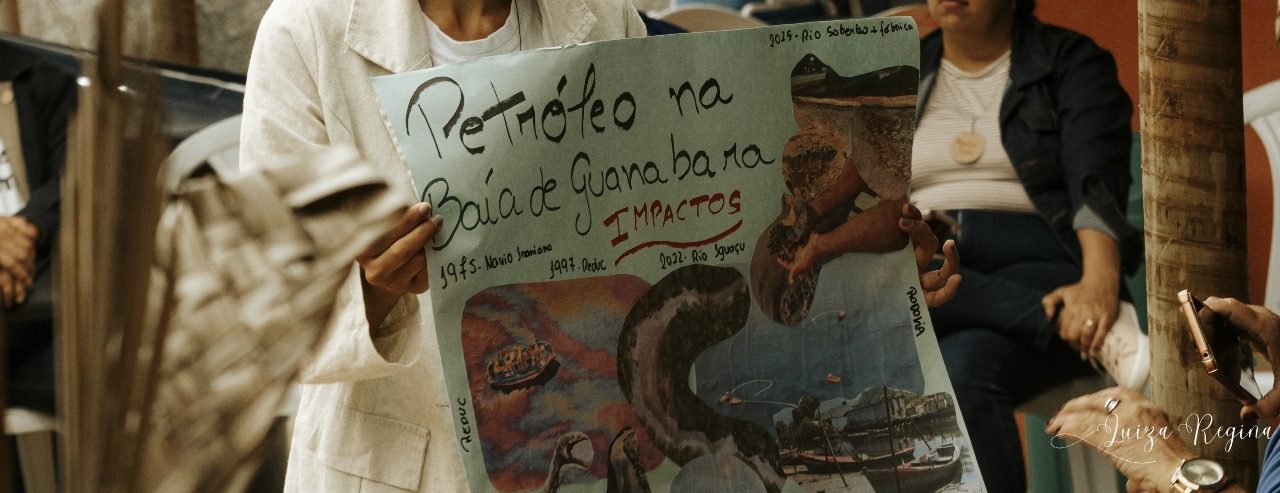
The environmental disaster reignited debate about Magé’s vulnerability to industrial impacts resulting from oil and gas in Guanabara Bay and its tributaries. On January 18, 2000, the Suruí River had already suffered a spill of approximately 1,300 m³ of marine fuel oil (MF380) from a REDUC pipeline. Environmental studies conducted at the time considered the mangrove swamp most degraded by this environmental crime in the region.
Later, in 2018, the municipality of Magé suffered another spill within the Rio Estrela Environmental Protection Area, polluting the river and harming its fishing community and residents. This highlights how the oil industry operates in this region, socializing losses while privatizing profits. And, more recently, in April 2024, a toluene spill contaminated several rivers, including the Guapiaçu River basin in the municipality of Guapimirim, which borders Magé. This resulted in water shortages for millions of people in several cities in the state of Rio de Janeiro, in addition to causing massive fish die-offs, affecting fishing in the region.
Given this history of deterritorializing actions by the oil industry, GreenFaith Brasil joined forces with local organizations (ACAMM, AHOMAR, and the Mirindiba Institute for Popular Climate Action) to fight the Suruí River accident, not just as an isolated case, but as yet another consequence of this energy model that grows based on the destruction of ecosystems and the livelihoods of the populations that depend on them, whether directly or indirectly.
The oil spill on the Suruí River demonstrates the need for a more systemic approach to the environmental damage caused by the oil industry in Guanabara Bay, which has been accumulating for decades. Local ecosystems and communities in this region have not been able to regenerate from the degradation caused by past environmental crimes, as they continually experience new disasters that impact biodiversity. This development process, based on ecosystem destruction, has consequences for food sovereignty, leisure, tourism, and ways of relating to nature, as shown in the master’s study conducted in 2022 by Carla Lubanco, a researcher and resident of Suruí.
Faith for Climate Justice
The Interfaith Walk for Climate Justice on the Suruí River was, therefore, an act of unity among diverse faiths, building a narrative that allows for a different perspective on this region. This interfaith movement is not isolated, but part of a global effort, the “Faith for Climate Justice” campaign. In Brazil, GreenFaith has been working to strengthen traditional fishing communities and maintain biodiversity as possibilities for economic and social growth in this region, to the detriment of the decline in oil exploration, which has only generated profits for companies, leaving communities increasingly socially vulnerable in the context of the Climate Emergency.
It is in this local context that the relationship between faith and the environment becomes even more urgent in the face of the climate emergency and environmental disasters, such as the one that occurred on the Suruí River. For many people of faith, nature is a sacred creation, and caring for it is a spiritual and ethical act that transcends doctrine. In times of crisis, it is these faith communities that often open their doors to welcome and support those most affected, offering support and a space of dignity amidst the devastation.
Thus, climate justice gains strength when incorporated by religious movements, which advocate for a harmonious and respectful relationship with nature. This spiritual commitment highlights the importance of protecting the environment as part of human responsibility toward the sacred, especially for local populations whose lives and cultures are intrinsically linked to the environment around them. The union of voices from diverse faiths through GreenFaith Brazil seeks to transform this relationship, instigating everyone’s commitment to preserving life and the planet.
Through faith, GreenFaith Brazil calls on all who believe it is possible to (re)build our relationship with nature through the sacred, advocating for the protection of ecosystems and confronting the predatory actions of the oil industry in Guanabara Bay, its rivers, and mangroves. This walk symbolizes hope that, even in the face of environmental crimes and government disregard for the suffering of local communities, there are still those who recognize the value of biodiversity and human interdependence with ecosystems. The fight for climate justice is inseparable from the struggles for social, racial, and gender justice, which touch the lives of everyone, including people of faith, regardless of their beliefs.