Review: Generation GreenFaith Retreat in Karlsruhe
Share
“I learned a lot about the different experiences that arise from our cultures and religions, as well as about awareness of privilege.” (Participant Generation GreenFaith 2025)
The first in-person meeting of Generation GreenFaith took place in Karlsruhe from July 25–27, 2025 – a weekend full of encounters, spirituality, and shared visions for climate justice. As joint hosts for the first time, GreenFaith France and GreenFaith Germany invited around 25 climate activists from very diverse backgrounds to Karlsruhe.
“…that I have gotten to know my story and my motivation better – this strengthens my vision.” (Participant)
Experience community and spiritual strengthening
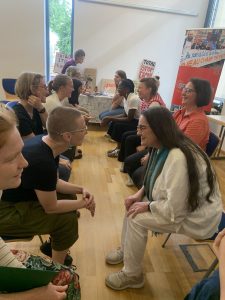
The opening event was all about arrival and multi-religious solidarity . After a warm welcome, we lit the green GreenFaith candle as a symbol of our shared hope. Then the participants got to know each other better during speed dating.
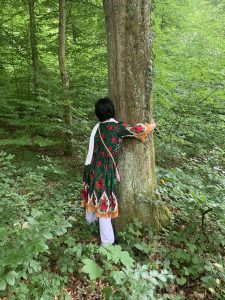
“What spiritual or deep experiences do you connect with the earth/nature/environment?”
In small groups, we shared our ” climate biographies” with each other . This was an invitation to understand our own story as part of this change. Because our spirituality, our own experiences, and the values and attitudes that shape us are powerful resources for climate engagement.
The concluding “Shabbat prayer for Gaza” by Sophie from Paris made the call for justice loud.
“I found the connections and the various spiritual and creative impulses so enriching.” (Participant)
Combining theology, art and climate activism
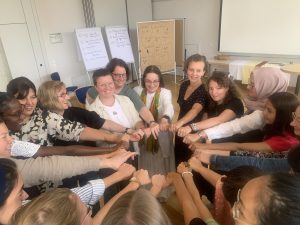
Kicking off on Saturday: This generation of GreenFaith is musical and spontaneous, so there was jamming, stomping, and singing. And prayer.
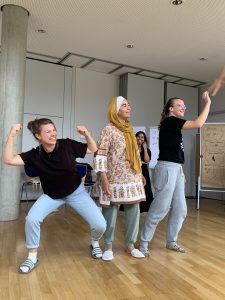
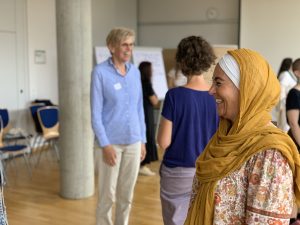
Afterwards, Amélie Franco from GreenFaith France got us laughing and feeling with a playback theater workshop—a playful way to listen to one another. In the day’s keynote speech, Dr. Simone Sinn from Münster traced the historical arc of interreligious cooperation, connecting theological tenets of world religions with climate justice.
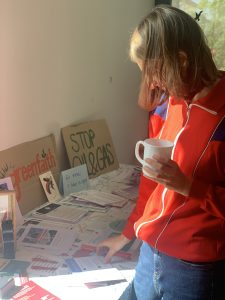
In the afternoon, we met with local climate activists such as the Karlsruhe Climate Alliance , the Resistance Collective , and the GreenFaith Circle Karlsruhe . Local climate struggles against fossil fuels and deforestation are also taking place, strengthened through actions, alliances, and spiritual moments.
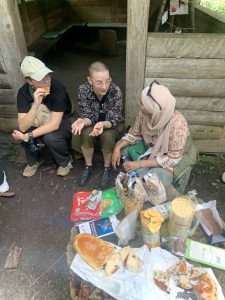
Shortly thereafter, we found ourselves in the elements – due to heavy rain, our planned excursion was spontaneously relocated to a forest hut. And this created a very special atmosphere for exchanging activist experiences.
Popular Ecology – a decolonial perspective
In the evening, Nadia Omani (Marseille) introduced us to the concept of Popular Ecology – a decolonial ecology that visualizes the connections between ecological crisis, colonialism, and capitalism. The key points:
Ecology is not only nature conservation, but also resistance against power structures that justify the exploitation of people and the earth.
It needs the voices of indigenous communities, postcolonial diasporas and alternative cosmologies such as Pachamama , Ubuntu or Vivir Bien .
Decolonial ecology also means demanding ecological justice – for example, through the fight against environmental racism and for reparations approaches.
As people of faith, we bear a double responsibility: horizontally within our communities and vertically before God, the Creator.
Nadia’s message to the GreenFaith generation: Resistance requires autonomy, connection and spiritual strength
Nadia Omani
New perspectives on intercultural and decolonial cooperation
The last day was dedicated to two central themes:
Decolonization and intersectionality in the climate movement – with inputs from Khadidja Lahlali (Marseille) and Micheline Pham (Paris), who made power relations, racism and global injustices visible.
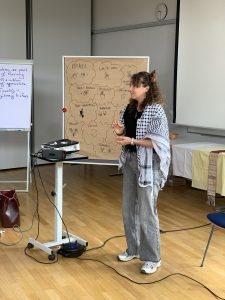
Intercultural Collaboration – led by Eleanor McCormick (Stuttgart) and Büsra Cebi (Tübingen). Exercises in deep listening and interreligious dialogue helped us explore new forms of collaboration. In small groups, we planned a fictitious interreligious climate action – a glimpse into what’s possible when our spirituality(ies) and commitment come together.
“We are so grateful that we have all met each other and that there are so many wonderful people who keep the hope for a just and loving world alive.”
Voices and projects from the community
The retreat was also a space to share personal projects and inspirations.
Tabea (Leipzig) presented her book project , which brings together poems and stories from Lebanon – a product of the “Lebanon Poetry Project.” Dayana (Berlin) reported on a project in her home country of Colombia, where local groups are protecting turtles from extinction. Micheline (Paris) spoke about her work with Collectif Vietnam Dioxine in France, which supports victims of Agent Orange in the Vietnam War. Milka (Pakistan) presented interreligious cooperation in times of natural disasters. Khadija (Marseille) shared her approach to decolonization, and Svenja (Berlin/Nairobi) is currently starting her own sustainable safari business in Kenya. Peggy composes her own songs and lyrics that revolve around the search for spirituality and closeness to nature. We met so many amazing people of faith who are working for a compassionate, just, and loving world.MichelineSvenjaMilkaKhadija
Our conclusion
The retreat in Karlsruhe demonstrated that climate justice is more than political action—it is a spiritual, cultural, and communal task. Through encounters, shared learning, and shared hope, we are beginning a movement that is locally rooted and globally connected: the “Generation GreenFaith.”
👉 Follow us on Instagram and stay connected with #GenerationGreenFaith – and in 2026 there will be exciting new formats that you can register for soon.
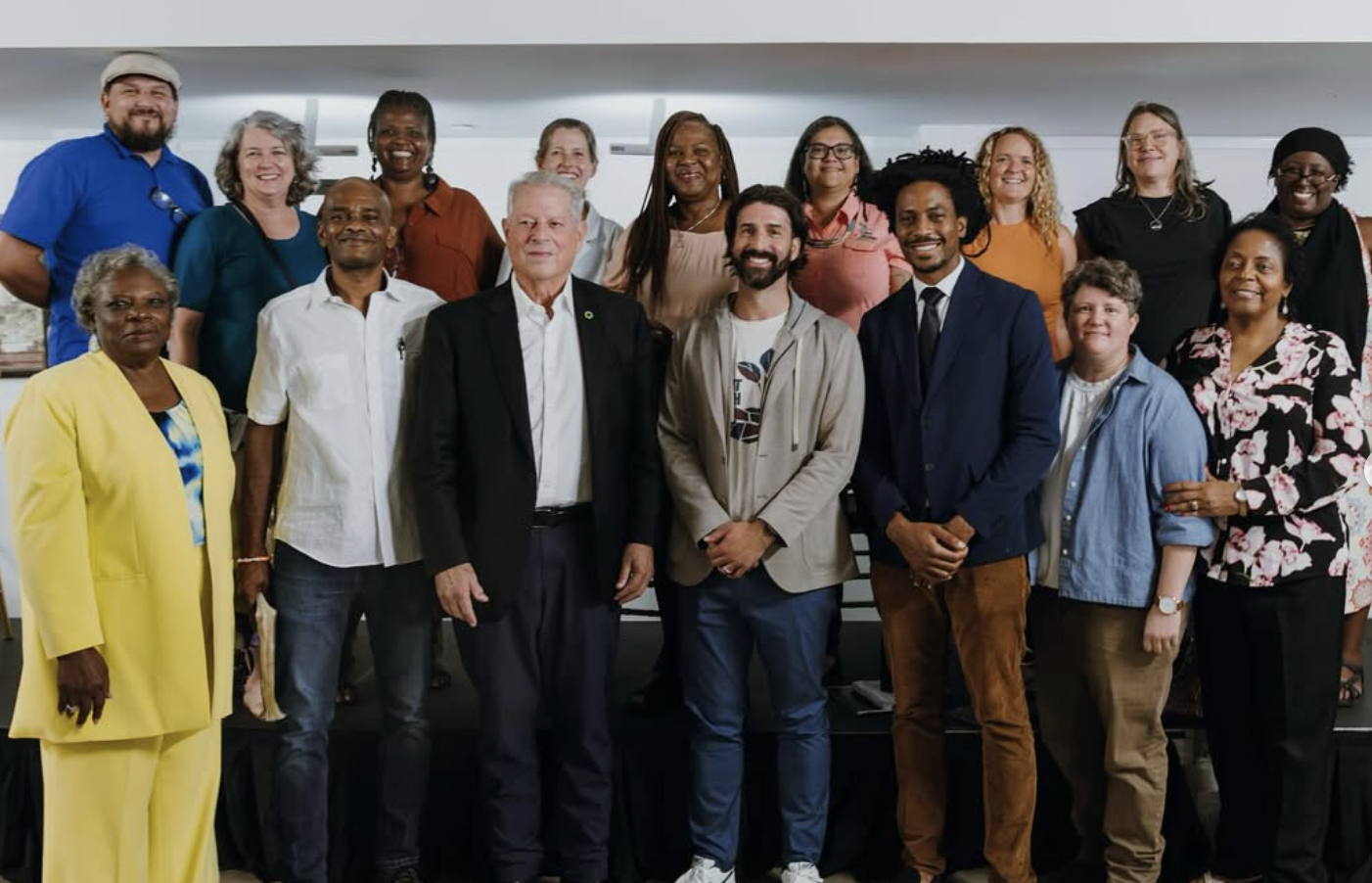
Katrina 20: Faith, Climate & Justice – A Moral Witness Dialogue
By Eloise ReidEloise Reid is the Gulf South Organizer with GreenFaith, based in New Orleans, LA. Last week, I had the honor of organizing Katrina 20: Faith, Climate & Justice – A Moral...
Latin America, News
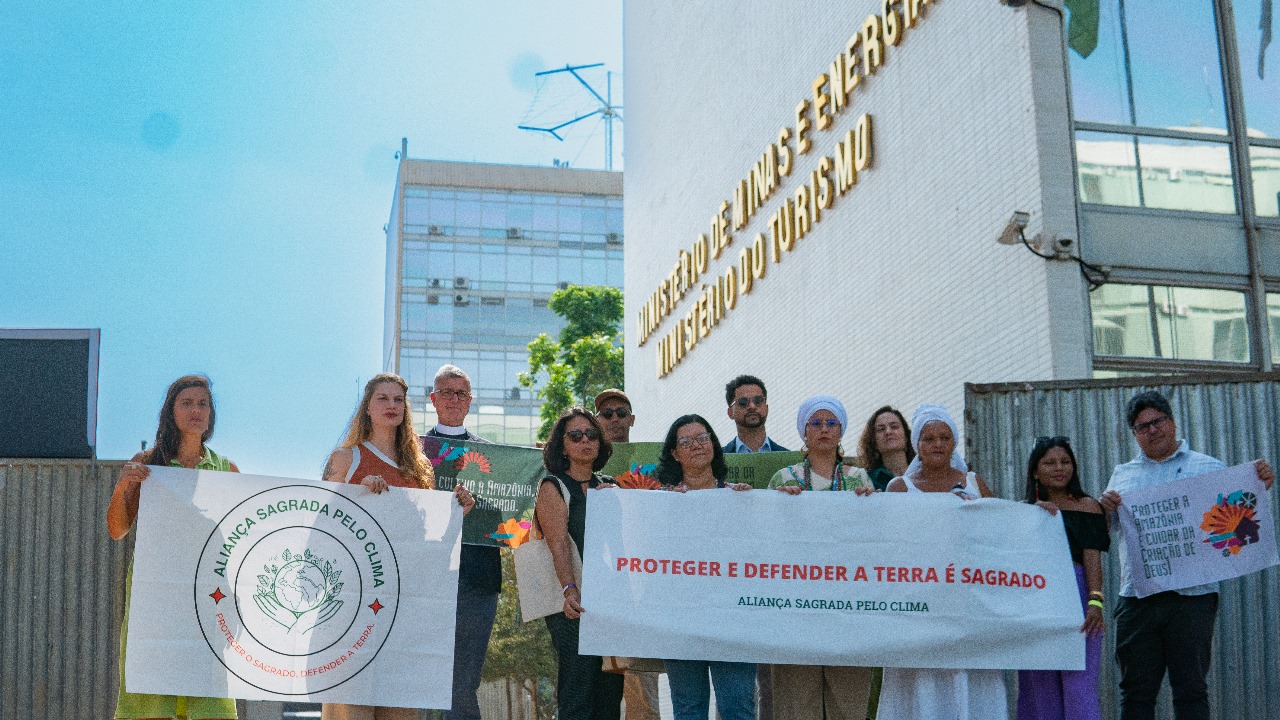
Sacred Alliance for Climate
Brazil faces significant challenges related to climate change, including deforestation in the Amazon, rising greenhouse gas emissions, and adverse impacts on local communities. Religious communities play an important role in Brazilian society...
Latin America, News
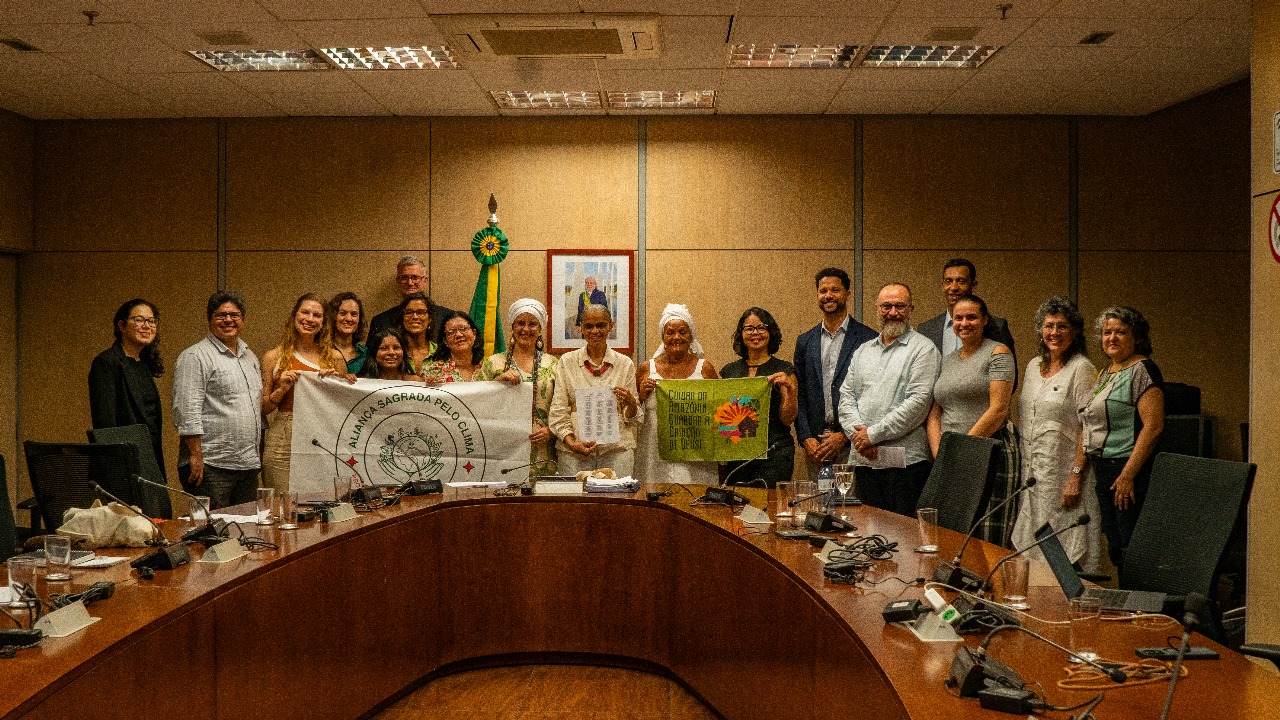
Inter-religious charter of the sacred climate alliance
Nature as a Spiritual Expression Calls for Urgent Action We, religious leaders from diverse traditions and spiritualities, unite in this letter to express our deep concern about the successive and growing environmental...