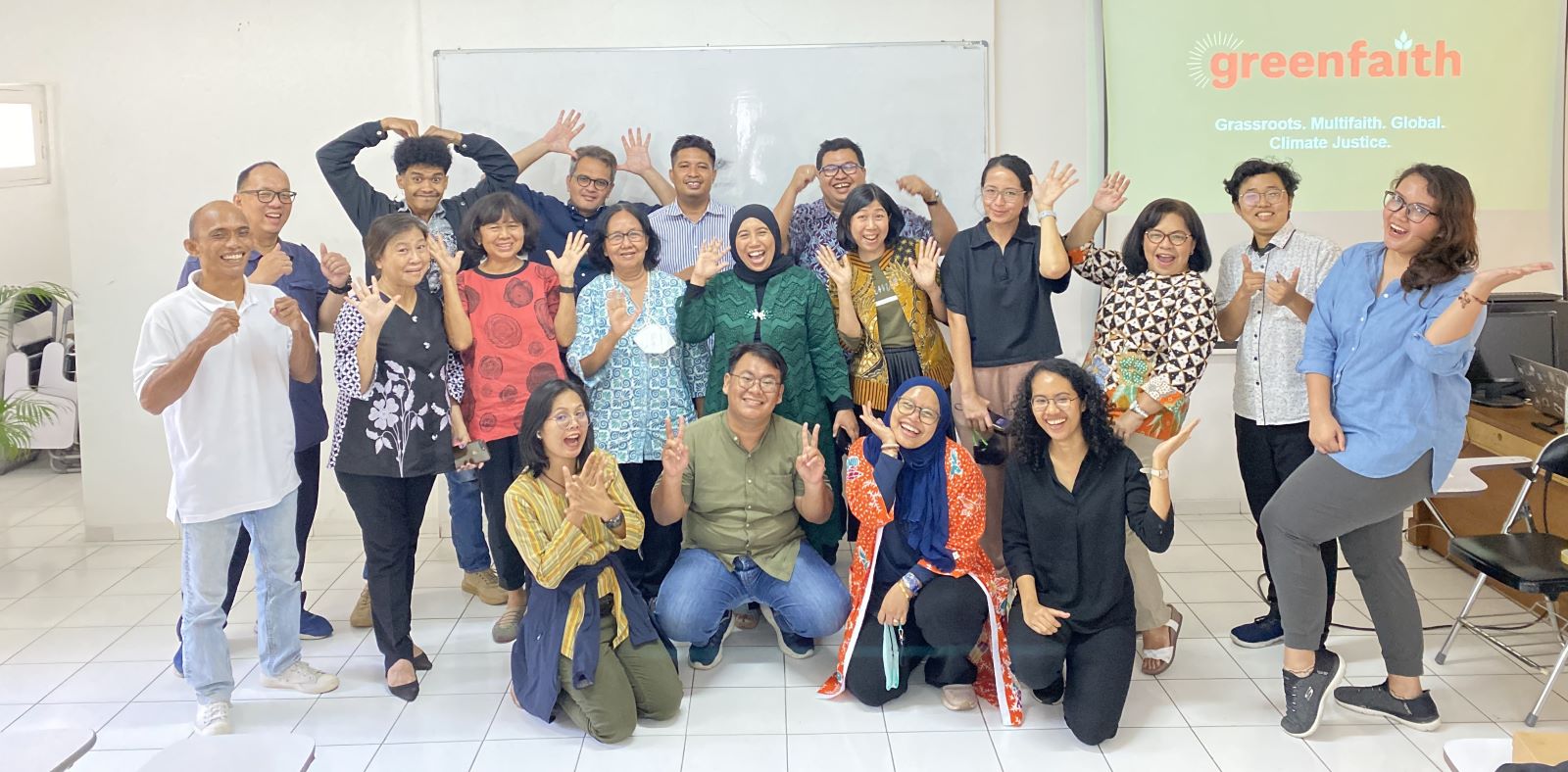
Jakarta, January 25, 2024. In collaboration with the Jakarta School of Philosophy and Theology, GreenFaith Indonesia discussed climate justice with student groups and Christian and Catholic-based communities, January 25, 2026. The event was opened by the Rector of STFT Jakarta, Prof. Binsar Jonathan Pakpahan, who in his remarks emphasized that global climate negotiations such as the COP are not very efficient, so what needs to be done is to mobilize the community to take real action. “Not to mention the earth is getting hotter, to be honest, even the COP efforts are not very efficient. For example, the target of the country’s commitment in 2030 has now been postponed to 2050. Including promises of transformation to electric energy, for example electric cars but still using coal,” said Prof. Binsar.
Prof. Binsar also touched on concerns about the current state of clean water availability. If it continues to decrease, there’s no denying the threat of the current climate crisis. A more immediate concern is Jakarta’s condition in 2030, given the massive groundwater extraction being carried out.
In her remarks, Hening Parlan, Coordinator of GreenFaith Indonesia, responded to the COP28 meeting and demanded consistency from policymakers in each country. “Recalling COP 27, it was indeed unsatisfactory, ladies and gentlemen. Many scientists conducted research there, and there was nothing wrong with it. However, the results were not followed up, especially by policymakers. The main problem is greed. The problem with greed is that they are confused, what should they do? Greed must be returned to its human side. How humanity must foster empathy,” said Hening. This is the basis for conducting Climate Justice Training as part of raising awareness of building an environmentally based sense of humanity.
The presentation began with Dr. Bondan Kanumoyoso, SS, M.Hum., a historian from the University of Indonesia, who identified the roots of climate change as the colonial era. According to Bondan, environmental exploitation has been occurring since the Dutch East India Company (VOC) controlled the Indonesian archipelago, particularly the spice trade. Deforestation and the conversion of forests to plantations continued under the Dutch colonial rule from 1709.
“From the history of Dutch colonialism in Indonesia, it is clear that the climate change we are experiencing today is the result of the accumulation of various forms of economic exploitation carried out without considering the balance of nature,” said Bondan, closing his presentation.
In the material on environmental conservation from a Christian perspective presented by Professor Binsar Pakpahan, one of the highlights was the moral movement of Ugahari, or living in moderation, which many felt lacked motivation. “The concept of enough is different for everyone. It’s enough for those who feel they have enough, but for those who lack, we can’t say it’s enough,” Professor Binsar said. However, God entrusted this natural world not to be exploited but to be cared for.
Theodorus A. Harjana of Laudato Si Indonesia reminded Catholics to follow Pope Francis’ encyclical Laudato Si, which serves as a guide for prayer and hope. The central tenet of Laudato Si is a call for Catholics to be conscious of protecting the environment and preventing its destruction. According to Theo, Catholics continue to strive for environmental improvement within the Laudato Si movement, of which he is a member.
Throughout the event, responses from the female audience began to resonate. Debbie Sondakh from the Indonesian Protestant Church expressed her hope that the GreenFaith Indonesia movement would have a significant impact. Even as she entered her senior years, age would not hinder her enthusiasm and commitment to speaking out about the dangers of the climate crisis, given her concern over the disasters occurring in Indonesia. Similarly, Ibu Esther enthusiastically participated in the event.
“Training and nurturing children and families to develop an environmentally conscious attitude is the primary step we need to take together. If necessary, we can start by promoting the hashtag #stopplasticwaste,” Esther said in response to an activity following up on her commitment to achieving climate justice. Undeniably, the closest step is within the family. Therefore, in her vision, if all families in Indonesia are able to do this, our nation will be able to realize climate justice for all people on this earth.